Top Home Insurance Companies in California
Finding home insurance companies in California right now feels a bit like trying to buy concert tickets five minutes after they go on sale—stressful, confusing, and you’re not sure if there will be anything left for you. If you’ve turned on the news lately, you’ve probably heard the scary headlines: big home insurance companies are leaving, rates are going through the roof, and wildfires are changing everything.
But here’s the good news: you still have options. You just need to know where to look and what to look for. There are still plenty of reputable home insurance companies willing to write policies here; you just have to match your specific needs with the right carrier.
I’ve spent hours digging through the latest 2026 data, rate filings, and customer reviews to bring you a clear picture of the home insurance landscape in California. Whether you’re a first-time homebuyer in Sacramento, a long-time owner in the Bay Area facing a non-renewal, or someone in SoCal just trying to bundle and save, this guide is for you. We’ll look at which home insurance companies are currently active, which ones are raising rates, and which ones are actually expanding their coverage areas.If You want to know About Loan click here.
Let’s break down who the top players are, how to actually compare quotes, and what you can do to lower your bill without sacrificing coverage.
Why Is California’s Home Insurance Market So Crazy Right Now?

Before we dive into the list of home insurance companies, we have to address the elephant in the room. Actually, the elephant is on fire, and it’s standing in your backyard.
California is in what experts call a “hard market.” This isn’t just insurance jargon; it’s a reality where it costs more to get coverage, and fewer home insurance companies are willing to offer it.
- Wildfire Catastrophes: The January 2025 Los Angeles wildfires (the Palisades and Eaton fires) were a gut punch to the insurance industry. They destroyed over 16,000 structures and caused tens of billions in insured losses. When home insurance companies have to pay out that much money, they get nervous about sticking around. Some have paused writing new business entirely.
- Soaring Rebuilding Costs: Even if a fire doesn’t touch your home, the cost to rebuild one has skyrocketed. Inflation has made lumber, concrete, and labor way more expensive. If your policy hasn’t kept up with these costs, you could be seriously underinsured. This is why many home insurance companies are now requiring updated appraisals.
- The Regulatory Dance: For a long time, California had strict rules that prevented home insurance companies from using future-prediction models to set rates. They had to look at the past. But the past doesn’t predict the future very well anymore. The state recently introduced the Sustainable Insurance Strategy, which allows home insurance companies to use catastrophe models and, in exchange, forces them to write more policies in high-risk areas. This is a huge shift.
What does this mean for you? It means some of the old giants (like State Farm and Allstate) paused writing new policies for a while, and other major home insurance companies have gotten approval for significant rate increases—we’re talking 6.9%, 8.2%, and in some cases, a jaw-dropping 34% for Allstate policyholders.
But, and this is a big but, the market is starting to stabilize. Major home insurance companies like Farmers Insurance have already removed caps on new policies because of the new state strategy. So, let’s meet the insurers who are still in the game and ready to earn your business.
The Top Home Insurance Companies in California for 2026

I’ve categorized these home insurance companies based on what they do best. Because the “best” company for your neighbor might be a terrible fit for you if you live in a different county or have a different roof type. When shopping around, it pays to compare at least three different home insurance companies to see who offers the best rate for your specific risk profile.
1. Chubb: The Gold Standard for High-Value Homes
If you own a custom home, a historic property, or just a place with a rebuild cost that makes your eyes water, Chubb is likely your best bet. They don’t do cheap policies; they do excellent policies. Among luxury-focused home insurance companies, Chubb is the undisputed leader.
Chubb ranked highest in the J.D. Power 2024 U.S. Property Claims Satisfaction Study. When you pay a claim, they don’t nickel-and-dime you. They offer features like extended replacement cost (which can pay to rebuild your home even if it costs more than your policy limit) and “agreed value” coverage, meaning they don’t deduct for depreciation. While many home insurance companies use actual cash value for older items, Chubb focuses on replacement cost.
Best For: Homeowners with significant equity in their homes who want the peace of mind that comes with a top-tier claims experience.
The Catch: You pay for this quality. Premiums are on the higher end, averaging around $3,975 for significant dwelling coverage. But if you can afford it, it’s worth it.
2. AAA / CSAA: The Roadside Heroes (Now with Home Savings)
If you’re an existing AAA member, or if you’ve been thinking about joining for the roadside assistance, this is a great route. In Northern and Central California, AAA home insurance is underwritten by CSAA. In Southern California, it’s the Automobile Club of Southern California. Both are solid home insurance companies with deep roots in the state.
These guys just got approval for a 6.9% rate increase in 2026, but here’s the twist: they are also expanding coverage in wildfire-distressed areas. They’re playing ball with the state’s new rules.
- Why choose them? If you live in an area where home insurance companies are hard to find, CSAA has committed to insuring more people there. They are stepping up when others are stepping back.
- Discounts Galore: They offer discounts for “home hardening”—things like clearing defensible space, installing ember-resistant vents, and even putting in water leak monitoring devices. Not all home insurance companies offer such specific wildfire mitigation discounts.
- Membership Required: You need to be a AAA member, but that membership often pays for itself with the insurance discount and the free towing.
3. Mercury Insurance: The Affordability King (With Fine Print)
Mercury is a California-born company (founded in LA), and they write a ton of business here. They are consistently rated as one of the most affordable home insurance companies in the state.
However, “affordable” doesn’t mean “cheap coverage.” It means they offer a lot of discounts. They just got approval to raise rates by an average of 8.2% for homeowners, but here’s the kicker: if you live in a high-risk area, your rate could go up by as much as 124%, or down by 15%, depending entirely on your specific home’s risk profile. This makes Mercury one of the more dynamic home insurance companies when it comes to pricing.
What you need to know:
- Wildfire Discounts: Mercury is leading the charge on rewarding mitigation. If you create defensible space, enclose your eaves, or use non-combustible decks, you can reduce the wildfire portion of your premium by up to a third. Few home insurance companies offer discounts this substantial for proactive homeowners.
- Bundling: They offer a massive discount (up to 17.9%) if you bundle your home and auto. This is one of the highest bundle discounts among major home insurance companies.
- Availability: They are actively writing new policies, including in areas like Paradise, the site of the devastating 2018 Camp Fire. This makes them a standout among home insurance companies willing to return to previously devastated areas.
4. Lemonade: The Tech-Savvy, AI-Driven Option
Let’s be real: dealing with insurance agents can feel like stepping back into the 1990s. If you’d rather do everything on your phone while waiting for your coffee, check out Lemonade. They represent the new wave of home insurance companies that operate entirely online.
They use AI and bots to handle applications and claims. We’re talking about claims that get paid in minutes, not weeks. They offer homeowners insurance starting at around $25 a month. For younger demographics, these digital-native home insurance companies are incredibly appealing.
Best For: Younger homeowners, tech professionals, or anyone who hates phone calls. They are great for standard homes in lower-risk areas.
The Catch: Because it’s all automated, you need to be accurate with your info. And while they cover wildfire (a huge plus in CA), they don’t offer the same level of high-touch customization for multi-million dollar estates that Chubb does. They have high customer recommendation scores, but mostly for ease of use. Traditional home insurance companies still win on personalized service.
5. Travelers: Best for Green Homes and New Builds
Travelers is a solid, traditional insurer that continues to have a strong presence in California. They are one of the few home insurance companies that actively promote green rebuilding practices.
First, they offer green home coverage. If you have a LEED-certified home or just want to rebuild with eco-friendly materials after a loss, Travelers will pay the extra cost to do so. They even offer a discount for LEED-certified homes. Most home insurance companies don’t offer this level of eco-conscious coverage.
Second, if you bought a newly built home in the last 12 months, you can save up to 10% on your premium. Newer homes usually have updated electrical systems and better building materials, making them less risky. This focus on modern construction sets Travelers apart from other home insurance companies.
6. USAA: The Unbeatable Choice for Military Families
USAA consistently tops customer satisfaction surveys, and in our analysis of California data, they have a 94% recommendation rate from members. Among home insurance companies serving the military community, USAA is the gold standard.
If you are active-duty military, a veteran, or a family member of someone who served, you should get a quote from USAA. They offer lower-than-average rates, and they have unique coverages, like covering uniforms and equipment without a deductible. Many home insurance companies overlook these specific needs.
The Catch: You have to be eligible through military affiliation. You can’t just walk in off the street. For those who qualify, however, very few home insurance companies offer the same level of loyalty and service.
7. California Casualty: For Educators and First Responders
This is a niche player, but they do their niche extremely well. California Casualty was founded in 1914 to serve teachers, and they’ve since expanded to include nurses, firefighters, and law enforcement officers. They are one of the few home insurance companies dedicated exclusively to public servants.
They understand the unique needs of public servants. For example, they offer auto replacement coverage if a first responder’s personal vehicle is damaged in the line of duty. They also align payment plans with school year schedules for teachers. If you work in public service, you owe it to yourself to check out these specialized home insurance companies before going with a national brand.
8. Nationwide: The Customizer
Nationwide is on your side, but more importantly, they are on your side with a lot of options. They are one of the home insurance companies that offer more than 20 different endorsements (add-ons) to your policy.
Want “Better Roof Replacement” that pays full value without depreciation? They have it. Want “Brand New Belongings” coverage? They have that too. The ability to customize so deeply is why many homeowners prefer Nationwide over more rigid home insurance companies.
They continue to write policies in most California counties, making them a safe bet for homeowners who want to build a policy piece by piece, rather than buying a one-size-fits-all package. In a market where many home insurance companies are pulling back, Nationwide’s stability is reassuring.
How to Actually Save Money (It’s Not Just About Shopping Around)
Everyone says “shop around,” and yes, you should get at least 3-5 quotes from different home insurance companies. But here is the real-world advice that actually moves the needle in 2026.
1. Raise Your Deductible (The Right Way)
Most people carry a $500 or $1,000 deductible. If you can afford to raise that to $2,500 or $5,000, your premium will drop significantly. In Los Angeles, for example, raising your deductible from $500 to $2,000 can lower your annual cost by over 24%. Most home insurance companies offer tiered deductible options, so ask about them.
Warning: Only do this if you have that cash set aside in an emergency fund. Insurance is for catastrophes, not for fixing a broken window.
2. Document Your “Home Hardening”
This is the secret weapon most homeowners don’t use. Home insurance companies are desperate to reduce risk. If you prove you’ve reduced your risk, they will lower your rate.
Go outside and take pictures. Have you:
- Cleared brush and created 100 feet of defensible space?
- Installed dual-pane windows?
- Replaced a wood shake roof with fire-resistant materials?
- Enclosed your eaves to prevent ember intrusion?
Send these pictures to your agent. Mercury, CSAA, and others offer specific discounts for this. Not all home insurance companies advertise these discounts, so you have to ask. Don’t assume they know—show them.
3. Check Your Coverage Limits (Don’t Insure the Land)
Here’s a common mistake: people insure their home for the price they bought it. That price includes the land. Land doesn’t burn. You only need to insure the cost to rebuild the structure. Many home insurance companies base their initial quotes on the purchase price, which can inflate your premiums.
If your home is valued at $800,000 but the rebuild cost is only $500,000, you might be overpaying. Ask your agent to run a new replacement cost estimator, especially given the recent changes in construction costs. Accurate data helps home insurance companies give you the fairest rate.
4. Bundle and Conquer
It’s boring advice because it works. Bundling your home and auto insurance with the same carrier can save you anywhere from 10% to 30%. Mercury offers nearly 18% just for bundling. Most major home insurance companies prioritize multi-policy customers and offer their best rates to them.
What If No One Will Insure You? (The FAIR Plan)
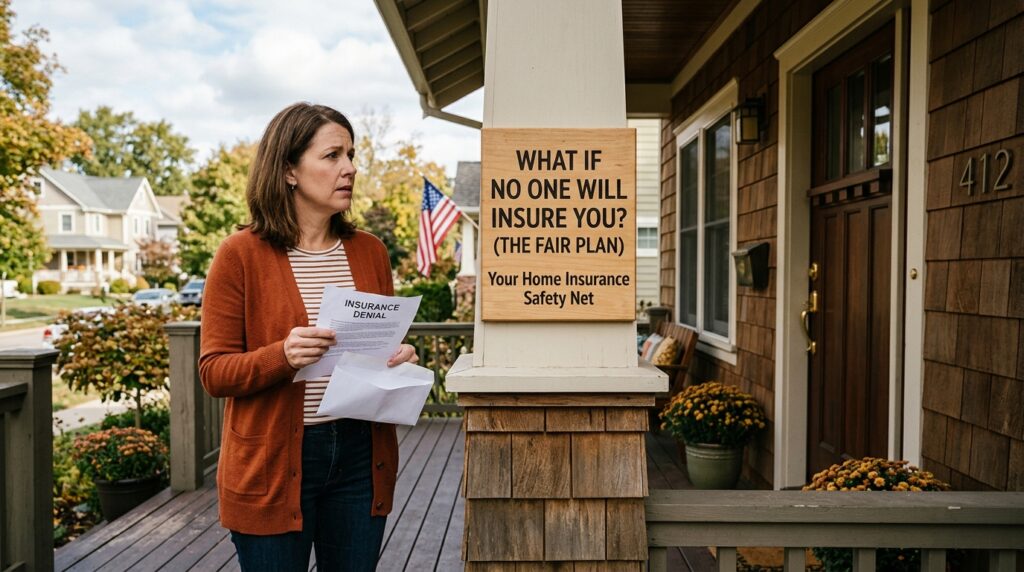
Let’s address the scariest scenario. You’ve called everyone, and you keep hearing “no” because of your zip code or your roof age. What then? When standard home insurance companies turn you away, you have to turn to the California FAIR Plan.
This is the “insurer of last resort.” It’s not a standard insurance company; it’s a pool that all home insurance companies contribute to, designed to provide basic fire insurance when no one else will.
Important: The FAIR Plan is a bare-bones policy. It primarily covers fire, lightning, and smoke. It usually doesn’t cover liability, theft, or water damage. It’s not a replacement for the comprehensive coverage offered by standard home insurance companies.
If you go on the FAIR Plan, you will need to buy a separate “Difference in Conditions” (DIC) policy from another insurer to wrap around it and cover liability and other perils. Yes, it’s more expensive and more complicated, but it keeps you legal and protected. Even in this scenario, you’ll be working with home insurance companies to provide the DIC wrap.
As of March 2025, over 555,000 California homeowners were on the FAIR Plan—a massive jump from previous years. If you’re in that boat, you’re not alone, and there are brokers who specialize in these “bundled” FAIR Plan packages.
Conclusion: Don’t Panic, Prepare
The California insurance market in 2026 is tougher than it was a decade ago, but it’s not impossible. The days of blindly renewing your policy every year without a second thought are over. You have to be an active participant. The key is to understand that not all home insurance companies are the same, and their appetites for risk vary greatly.
Start your search 60 days before your renewal date. Gather your documentation. Call an independent agent who can quote you from multiple carriers like Nationwide, Travelers, and Mercury. Check with niche carriers like California Casualty if you qualify. Compare at least three different home insurance companies before making a decision.
And remember, those scary headlines about 30% and 40% rate hikes? They are real for some, but discounts are real for others. If you harden your home, raise your deductible, and shop smart, you can find a policy that protects your biggest asset without breaking the bank. The right home insurance companies are still out there, ready to earn your business.
Frequently Asked Questions (FAQs)
Q: Is State Farm still writing home insurance in California?
A: State Farm paused new homeowner insurance applications in 2023, but they are still servicing existing policies. They recently requested a rate hike, indicating they are trying to adjust to the new market conditions. It’s best to check with a local agent for the most current status in your specific area, as the stance of major home insurance companies can change quickly.
Q: Does homeowners insurance cover earthquakes in California?
A: No, it does not. A standard HO-3 policy explicitly excludes earth movement. You need a separate earthquake policy, either from the California Earthquake Authority (CEA), a private insurer, or as an endorsement from home insurance companies like Palomar or Geovera.
Q: Why did my insurance company drop me even though I’ve never made a claim?
A: In insurance terms, this is called “non-renewal.” It often happens because the company’s overall risk exposure in your area has changed. After a big wildfire season, home insurance companies look at entire zip codes and decide they have too many policies there, regardless of your personal history. It’s a business decision based on aggregate risk, not your individual behavior.
Q: Will a metal roof lower my insurance costs?
A: It can, significantly. Roofs are the first line of defense against wildfire (embers landing on them). A Class A fire-rated roof, which includes metal, tile, and certain composites, is much more attractive to home insurance companies than an old wood shake roof. If you replace your roof, tell your insurer immediately to ensure you get the credit.
Q: What is the “Sustainable Insurance Strategy”?
A: It’s a major reform package rolled out by California Insurance Commissioner Ricardo Lara starting in late 2024/early 2025. It allows home insurance companies to use forward-looking catastrophe models to set rates (which leads to increases) but requires them to write more policies in underserved, high-risk areas in return. The goal is to stabilize the market and encourage home insurance companies to stay in California.

