car insurance You just got your license. Or maybe your teenager just came home with that little plastic card that suddenly makes them look way too grown up. Either way, there’s one thing standing between you and the open road: car insurance.
And if you’ve started shopping around, you’ve probably noticed something frustrating. The prices are high. Really high. Like, “maybe I should just ride a bike” high.
But here’s the thing. You need coverage. It’s the law in every state except New Hampshire and Virginia. And more than that, it protects you financially if something goes wrong.
So how do you find the best car insurance without emptying your wallet? I’ve spent weeks digging through 2026 data, talking to agents, and comparing rates. Let me walk you through everything you need to know.
Why Young Drivers Pay More for Car Insurance
Let’s start with the hard truth. Insurance companies aren’t trying to punish you personally. They’re playing the numbers game.
Think about it this way. If you were betting money on who would get into an accident, would you bet on the person with 20 years of driving experience or the person who just passed their test last week?
The statistics don’t lie. According to the Insurance Institute for Highway Safety, drivers aged 16 to 19 get into crashes at nearly four times the rate of older drivers. The Centers for Disease Control backs this up. Teens are three times more likely to be in a fatal crash than drivers aged 20 and older.
That’s why insurers see young drivers as high risk. And high risk means higher premiums. The average monthly premium for a full coverage policy with a teen driver clocks in around $296, according to recent data.
But here’s the good news. You don’t have to pay that much. The best car insurance companies offer ways to lower your rate. You just need to know where to look. If You want get Loan For car click Here
The Best Car Insurance Companies for Young Drivers in 2026
After comparing major insurers based on cost, coverage options, teen-specific discounts, and customer satisfaction, here are the top contenders for 2026. Remember, the “best” company often depends on your specific situation—whether you’re adding a teen to a parent’s policy or a young adult buying their own.
1. Erie Insurance: Best Overall for Teens and Young Adults
If you live in one of the 12 states where Erie operates, you might have just hit the jackpot. Erie Insurance takes the crown for best car insurance overall in 2026, and for good reason.
Why it stands out:
Erie offers some of the lowest rates we’ve seen across the board. Whether you’re adding a 16-year-old to a family policy or you’re a 21-year-old buying your first solo policy, Erie is consistently affordable. Our analysis shows that for parents adding a 16-year-old, the average annual cost with Erie is around $3,520. That’s significantly lower than the national average.
The Perks:
- Accident Forgiveness: They offer this valuable coverage, meaning your rates might not skyrocket after that first fender bender.
- Rate Lock: Erie has a feature called “Rate Lock,” which keeps your price the same year after year unless you make changes to your policy. In a world where prices usually go up, this is a big deal.
- Excellent Claims Service: Repair experts give Erie top scores for how they handle claims.
The Catch:
Erie is only available in 12 states plus Washington D.C., including Illinois, Indiana, Kentucky, Maryland, New York, North Carolina, Ohio, Pennsylvania, Tennessee, Virginia, West Virginia, and Wisconsin. Also, you’ll need to go through a local agent to buy a policy. But if you’re in those states, this might be the best car insurance you can find.
2. Nationwide: Best for Adding a Teen to a Parent’s Policy
If you’re a parent looking to add your newly licensed teen to your existing policy, Nationwide is a name you need to check out.
Why it stands out:
Nationwide offers the best overall average rate for adding a teen driver to a parent’s policy. We’re talking about an average annual cost of just $2,993 for parents and a 16-year-old. That’s over $1,600 cheaper than the national average.
The Perks:
- Coverage Options: They offer useful add-ons like accident forgiveness, gap insurance (which pays the difference between what you owe on a car and what it’s worth), and new car replacement.
- Multi-Policy Discounts: As a large national carrier, Nationwide offers great discounts if you bundle your auto insurance with home or life insurance.
The Catch:
While their rates for adding teens are fantastic, their digital experience could be better. You can’t always buy a policy completely online and may need to speak with an agent. But if you’re looking for the best car insurance for a family situation, Nationwide deserves a spot on your quote list.
3. Geico: Great for Teens Buying Their Own Policies
Maybe you’re a young adult who’s moved out, or perhaps staying on the family plan just isn’t an option. If you’re buying your own policy, Geico is a fantastic choice.
Why it stands out:
Geico consistently offers affordable rates to teens and young adults purchasing their own insurance. For teens aged 16 to 19 buying a solo policy, Geico’s rates are over $1,700 lower than the nationwide average. The Motley Fool also named Geico the “Best Insurance for Teens and New Drivers” in their 2026 awards, citing its affordability and reliability.
The Perks:
- Digital Experience: Geico’s mobile app and website are top-notch. You can get a quote, manage your policy, and file a claim entirely from your phone.
- Military Discounts: Geico is famously military-friendly, offering discounts to active duty, National Guard, and veterans.
The Catch:
Geico is great for price and convenience, but it doesn’t offer as many extra coverage options as some competitors. If you’re looking for things like vanishing deductibles or new car replacement, you might not find them here. But for pure affordability, it’s hard to beat Geico as the best car insurance for young adults on their own.
4. The Hartford: Best for AARP Members
The Hartford took the top spot in Yahoo Finance’s analysis for teen drivers, and it’s a particularly smart choice if a parent or grandparent is an AARP member.
Why it stands out:
The Hartford offered the cheapest rates for teenage drivers in their analysis, averaging just $236 per month. If you can get the AARP discount, the savings add up even more.
The Perks:
- Disappearing Deductible: This is a cool feature where your deductible goes down for every year you go without an accident.
- Teen-Specific Discounts: They offer discounts for driver’s education, good students, and students who are away at school without a car.
- Great App: Their mobile app has a fantastic user rating of 4.7 out of 5.
The Catch:
Their claims handling grade from repair experts is just average (C+). If you are a risky driver, their usage-based program (TrueLane) could actually increase your rates. But for AARP members, this is definitely the best car insurance option to consider.
5. USAA: Best for Military Families
If you are an active-duty military member, a veteran, or an immediate family member of one, USAA is consistently ranked as one of the best options out there, not just for young drivers, but for everyone.
Why it stands out:
USAA offers exceptional value to those who qualify. Their rates for young drivers buying their own policies are some of the lowest available, and they are also very competitive for families adding teens. Forbes named them a top pick for this very reason.
The Perks:
- Exceptional Customer Service: USAA policyholders are extremely satisfied with their service and are very likely to recommend the company.
- Military-Specific Benefits: They offer features like coverage for vehicles stored during deployment.
- Strong Financial Stability: You can trust that USAA will be there when you need them.
The Catch:
Eligibility is limited strictly to the military community and their families. If you’re not in that group, you cannot buy a policy from USAA. But if you qualify, it’s arguably the best car insurance available.
6. American Family: Best Cheap Car Insurance
American Family is a strong contender, especially if you live in the Midwest or West. The Motley Fool actually named it the “Best Cheap Car Insurance” for 2026 due to its low overall average premiums.
Why it stands out:
For teen drivers, American Family offers the second-lowest rates in some analyses, averaging $239 per month. They also offer a unique discount for young volunteers.
The Perks:
- Generational Discount: If a young adult buys their own policy and a parent is already a customer, they can get a discount.
- Young Volunteer Discount: Drivers under 25 who complete 40 hours of volunteer work per year can save money.
The Catch:
American Family is only available in 19 states, primarily in the Midwest and West. Their mobile app scores are also a bit lower than some competitors. But for budget-conscious families in those areas, this is the best car insurance for keeping costs down.
Quick Comparison Table
| Insurance Company | Best For… | Average Monthly Cost (Teen Driver) | Key Teen Discounts |
|---|---|---|---|
| Erie Insurance | Best Overall | ~$293 ($3,520/year) | Good Student, Accident Forgiveness |
| Nationwide | Adding a Teen to Parent’s Policy | ~$249 ($2,993/year) | Good Student, Multi-Policy |
| Geico | Teens Buying Their Own Policy | ~$395 ($4,739/year) | Good Student, Military, Federal Employee |
| The Hartford | AARP Members & Lowest Rates | $236 | Driver’s Ed, Good Student, Away at School |
| USAA | Military Families | ~$334 ($4,002/year) | Good Student, Safe Driver, Multi-Vehicle |
| American Family | Budget-Conscious Families | $239 | Good Student, Young Volunteer, Away at School |
Note: Costs can vary significantly based on location, driving record, and coverage levels. Always get personalized quotes to find the best car insurance for your specific situation.
How to Save Money on Car Insurance for Young Drivers
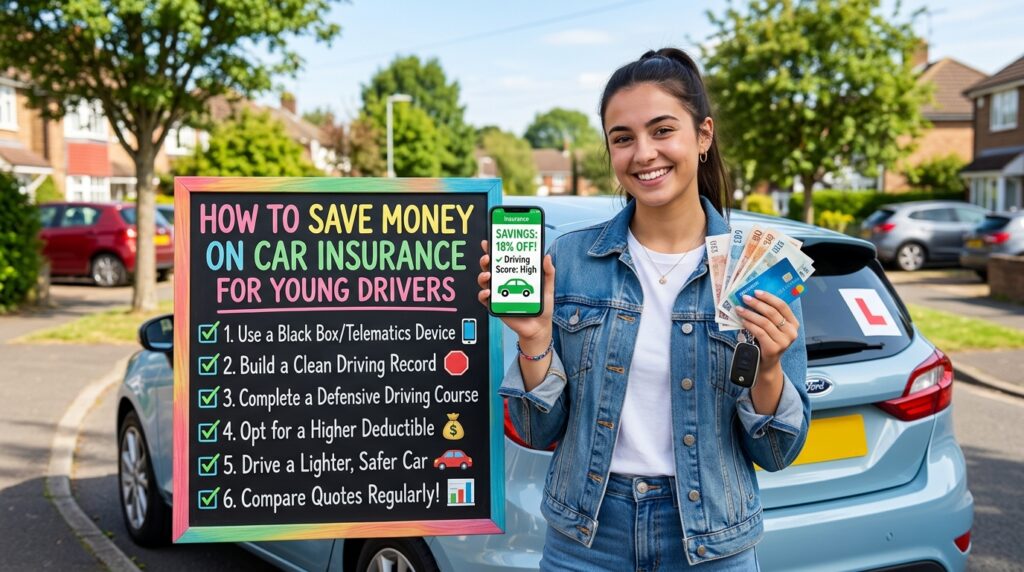
Okay, so those are the best companies. But no matter who you choose, there are proven strategies to lower that monthly bill. Here are the most effective ways to save in 2026.
1. Shop Around and Compare Quotes Every Year
This is the single most important step. Insurance companies don’t reward loyalty. In fact, they often bet that you won’t take the time to switch. Get quotes from at least three of the companies on this list every single year. Prices can vary by hundreds or even thousands of dollars for the exact same coverage.
When you’re looking for the best car insurance, remember that last year’s best deal might not be this year’s. Rates change. Your situation changes. Make it a habit to shop around.
2. Take Advantage of Every Discount
You’d be surprised how many discounts are out there. You just have to ask for them. Here are the big ones for young drivers:
- Good Student Discount: If you’re a full-time student under 25 and maintain a B average or higher, you can save big. Insurers see good grades as a sign of responsibility. This alone can make a company the best car insurance for students.
- Driver’s Education Discount: Completing an approved driver’s training course shows the insurer you’re serious about safety.
- Student Away at School Discount: If your teen goes to college more than 100 miles away and doesn’t take a car, let your insurer know. You shouldn’t have to pay for a driver who isn’t there.
- Defensive Driving Course: Even after you get your license, taking an additional defensive driving course can sometimes lower your rate.
- Multi-Car Discount: If your family has more than one car, insure them all with the same company.
- Bundling Discount: Combine your auto insurance with renters or homeowners insurance.
3. Stay on Your Parent’s Policy for as Long as Possible
If you’re a young adult living at home, it is almost always cheaper to be added to your parents’ policy than to buy your own. Insurers offer significant multi-vehicle and multi-policy discounts that you can’t get on a solo plan. In fact, adding a teen typically doubles the parents’ bill, but that’s usually less expensive than a separate policy.
For families trying to find the best car insurance, this strategy saves the most money. Keep the whole family under one roof, insurance-wise.
4. Choose Your Car Wisely
Before you fall in love with that sleek, powerful car, check its insurance group. In the US, cars are grouped by factors like safety ratings, repair costs, and engine size. A small, safe, four-cylinder car like a Honda Civic or a Subaru Impreza will be much cheaper to insure than a high-performance V6 or a luxury import.
Look for cars with top safety picks from the IIHS. The safer the car, the less risk for the insurer. And less risk means lower rates. When you’re shopping for a vehicle, think about insurance costs before you sign the papers. This research helps you find the best car insurance rates before you even buy the car.
5. Consider a Usage-Based Insurance Program
Many insurers now offer programs where they track your driving habits through a mobile app or a device in your car.
How it helps: If you prove that you’re a safe driver—by not speeding, braking hard, or driving late at night—you can earn significant discounts.
Popular Programs: Progressive’s Snapshot, Allstate’s Drivewise, and State Farm’s Drive Safe & Save.
A Word of Caution: If you have a lead foot, these programs might not save you money, and could even raise your rate. But for cautious young drivers, they’re a great way to prove you’re not a statistic. For safe drivers, this can make a company the best car insurance choice.
6. Raise Your Deductible
Your deductible is the amount you pay out of pocket before insurance kicks in. If you raise your deductible from $500 to $1,000, your premium will go down.
The Golden Rule: Only set a deductible that you could afford to pay in an emergency. If you don’t have $1,000 in the bank, stick with the lower deductible. The goal of finding the best car insurance isn’t just about the monthly payment. It’s about total affordability.
7. Maintain a Clean Driving Record
This one might seem obvious, but it’s worth stating. Speeding tickets and at-fault accidents can cause your insurance rates to skyrocket and stay high for years. Drive the speed limit, put the phone down, and focus on the road. It’s the best financial investment you can make in your insurance rates.
One ticket can cost you thousands in higher premiums over time. That’s why safe driving is the secret to the best car insurance rates.
8. Ask About Low-Mileage Discounts
If you don’t drive much, tell your insurer. Many companies offer discounts for low-mileage drivers. If you’re a student who only drives to school and back, or if you take public transit most days, you might qualify.
9. Pay in Full If You Can
Insurance companies love when you pay for six months or a year upfront. It saves them billing costs. Many will give you a discount if you pay the full premium instead of monthly payments.
10. Check Your Credit Score
In most states, your credit score affects your insurance rates. Insurers have found a connection between credit scores and the likelihood of filing claims. A better credit score often means lower rates. If your credit isn’t great, work on improving it. Over time, this can help you qualify for the best car insurance rates.
What Type of Coverage Do Young Drivers Really Need?
When you’re trying to save money, it’s tempting to buy the minimum coverage required by your state. For a young driver, this is usually a mistake. Remember, teens are four times more likely to get into an accident. Skimping on coverage now could lead to financial disaster later.
Here’s what you should actually buy to get the best car insurance protection:
Liability Coverage (Get More Than the Minimum)
This pays for damage and injuries you cause to others. State minimums are often laughably low. If a teen driver causes a serious accident, they could easily exceed the state limits, and the injured party could come after the family’s savings and future wages.
Experts recommend carrying higher liability limits than the state requires to protect your family’s assets. Think 100/300/50 if you can afford it. That means:
- $100,000 for injury per person
- $300,000 for injury per accident
- $50,000 for property damage
Collision and Comprehensive (Full Coverage)
If your car is worth more than a few thousand dollars, you need these.
Collision: Pays for damage to your car from an accident, regardless of who is at fault.
Comprehensive: Covers things other than collisions—theft, vandalism, hail, fire, or hitting a deer.
If your teen is driving an old, low-value car, you might be able to drop these coverages, as the insurance company would only pay the car’s actual cash value anyway. But for newer cars, full coverage is part of the best car insurance package.
Uninsured/Underinsured Motorist Coverage
Sadly, not everyone on the road has insurance. This coverage protects you if you’re hit by a driver who doesn’t have insurance or doesn’t have enough to cover your medical bills. It’s cheap and incredibly important.
According to the Insurance Research Council, about one in eight drivers on the road is uninsured. That’s too many to risk. Make sure this is in your best car insurance policy.
Medical Payments or Personal Injury Protection (PIP)
These cover medical expenses for you and your passengers after an accident, regardless of who is at fault. In no-fault states, PIP is required. In other states, medical payments coverage is optional but worth considering.
Gap Insurance
If you finance or lease a car, gap insurance is crucial. Here’s why: new cars lose value the moment you drive them off the lot. If you total that car a week later, your insurance pays you the current value, not what you owe. Gap insurance covers the difference.
If you owe more than the car is worth, gap insurance should be part of your best car insurance package.
State-by-State Considerations
Insurance rates vary dramatically by state. Where you live matters more than you might think.
High-Cost States: Michigan, Louisiana, and Florida typically have the highest rates in the country. If you live in these states, expect to pay more for the best car insurance.
Low-Cost States: Maine, Vermont, and Ohio usually have the lowest rates. Lucky you if you live there.
No-Fault States: About a dozen states have no-fault insurance laws, including Florida, Michigan, New York, and Pennsylvania. In these states, your own insurance pays your medical bills regardless of who caused the accident, up to certain limits.
Your City Matters Too: Rates can vary even within the same state. Urban areas usually have higher rates than rural areas due to more traffic, more theft, and more accidents.
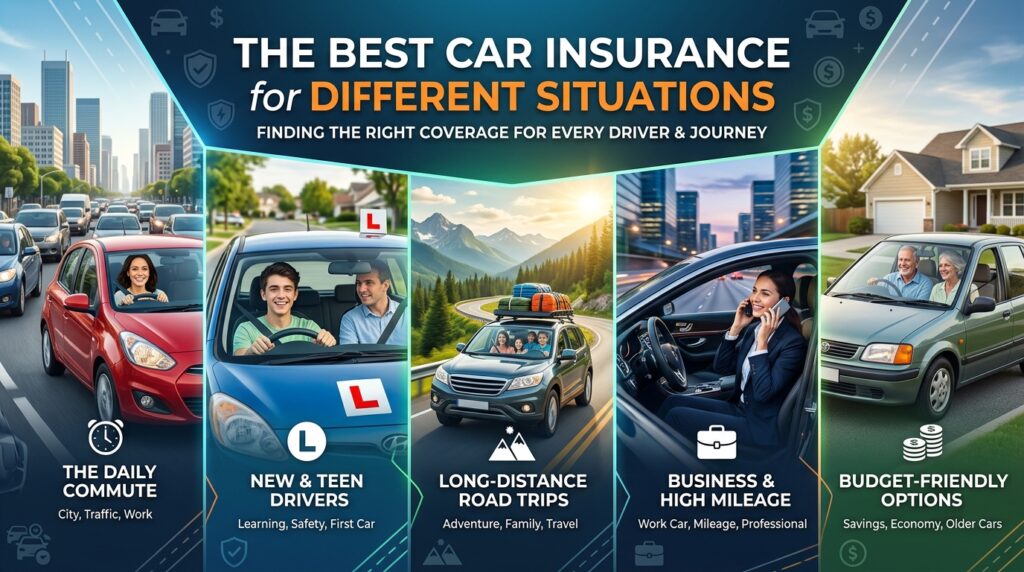
The Best Car Insurance for Different Situations
Best for High-Risk Young Drivers
If you already have a ticket or accident on your record, you’re considered high-risk. In this situation, The General or Acceptance Insurance might be your best bet. They specialize in high-risk drivers. Once you’ve maintained a clean record for a few years, you can switch to a standard carrier for better rates.
Best for Students Away at College
If your teen is heading off to college without a car, Nationwide and State Farm offer good “student away at school” discounts. Make sure to notify your insurer before they leave. This simple step can save you hundreds and still give you the best car insurance for your situation.
Best for Young Drivers with Their Own Car
If you own your car outright and are buying your own policy, Geico and Progressive are great places to start. Their online quote tools make it easy to compare rates and find the best car insurance for your budget.
Best for Families with Multiple Teens
If you have more than one teen driver in the house, State Farm and Allstate offer good multi-driver discounts. These larger companies have the capacity to insure multiple young drivers without breaking the bank.
When Can Young Drivers Expect Rates to Drop?
This is the question everyone wants answered. When does this expensive phase end?
Generally, rates start to decrease significantly around age 25, provided you have maintained a clean driving record. However, the gradual decline begins after age 19 or 20 as you gain more experience.
Here’s a rough timeline:
- Ages 16-19: Highest rates. You’re in the peak risk period.
- Ages 20-24: Rates slowly start to decrease each year.
- Age 25: Significant drop in rates for most drivers.
- Age 30: Rates continue to drop until around age 30-35, then level off.
The best way to speed up this timeline? Stay accident-free and ticket-free. Every year without an incident is a year closer to lower rates and the best car insurance pricing.
Technology That Helps Young Drivers Save
We’re in 2026 now, and technology has changed the insurance game. Here are some tech tools that can help you save:
Telematics Apps
We talked about usage-based insurance earlier. These apps track:
- Hard braking
- Fast acceleration
- Time of day you drive
- Phone usage while driving
Drive well, and you can save 10-30% on your premium. That’s a huge difference in finding the best car insurance rate.
Vehicle Safety Features
New cars come with amazing safety tech. Things like:
- Automatic emergency braking
- Lane departure warnings
- Blind spot monitoring
- Backup cameras
These features prevent accidents. And insurers know it. Many offer discounts for cars with advanced safety features. When you’re car shopping, look for these features. They could make a big difference in your insurance costs.
Anti-Theft Devices
If your car has an alarm system, a tracking device like LoJack, or even just a steering wheel lock, tell your insurer. You might qualify for an anti-theft discount.
Common Mistakes Young Drivers Make with Insurance
Let me save you some trouble. Here are mistakes I see young drivers make all the time:
Mistake 1: Lying About Where the Car Is Parked
Some young drivers list their parents’ address to get lower rates, even though they live at school or in an apartment. This is insurance fraud. If you get into an accident and they investigate, your claim could be denied. Don’t do it.
Mistake 2: Not Listing All Drivers in the Household
If you live with someone who occasionally drives your car, they need to be listed on your policy. If they get into an accident and they’re not listed, your claim might be denied.
Mistake 3: Buying the Minimum Coverage
I get it. You want to save money. But minimum coverage often leaves you exposed. If you cause a serious accident, you could be on the hook for hundreds of thousands of dollars. Spend a little more now to protect yourself later.
Mistake 4: Not Asking About Discounts
Insurance companies don’t automatically give you every discount you qualify for. You have to ask. When you’re getting quotes, specifically ask: “What discounts do you offer for young drivers?” Then see if you qualify.
Mistake 5: Assuming All Companies Are the Same
They’re not. Rates vary wildly between companies for the exact same driver. That’s why shopping around is so important. The best car insurance for your friend might not be the best for you.
Real-Life Example: How One Family Saved $1,200
Let me tell you about the Johnsons. They have a 17-year-old daughter, Mia, who just got her license. They got a quote from their current insurer for $3,800 per year. Ouch.
But they didn’t stop there. They:
- Got quotes from five different companies.
- Found that Nationwide offered $2,900 for the same coverage.
- Enrolled Mia in a defensive driving course for another discount.
- Raised their deductible from $500 to $1,000.
- Made sure Mia was assigned to their oldest car, not mom’s new SUV.
Final cost? $2,400 per year. That’s a savings of $1,400 just by doing some homework and finding the best car insurance for their situation.
Frequently Asked Questions About Car Insurance for Young Drivers
Q: At what age do car insurance rates go down?
A: Generally, rates start to decrease significantly around age 25, provided you have maintained a clean driving record. However, the gradual decline begins after age 19 or 20 as you gain more experience.
Q: Is it cheaper to add a teen to my policy or get them their own?
A: It is almost always cheaper to add a teen to a parent’s existing policy. Insurance companies offer multi-car and multi-policy discounts that make this far more affordable than a standalone policy for a young driver.
Q: Does my teen need their own policy if they have their own car?
A: Not necessarily. Even if the car is titled in the teen’s name, you can still add the vehicle and the driver to the parents’ policy as long as they live in the same household. This is the most cost-effective approach.
Q: What happens to my insurance if my teen goes to college without a car?
A: You can usually get a “student away at school” discount. Let your insurance company know your teen is living 100+ miles away and doesn’t have a car on campus. They will still be covered when they come home and drive, but you won’t be paying the high premium for them while they’re gone.
Q: Will letting my teen be a “named operator” on an old car save money?
A: Yes. You can save money by listing your teen as the primary driver of the oldest, least valuable car on the policy, rather than a brand new one. Even if they drive all the cars, having them “assigned” to a cheaper vehicle can lower the rate.
Q: Do I need to tell my insurance company when my teen gets their learner’s permit?
A: Yes! It is crucial to call your agent as soon as your teen gets their permit. Some insurance companies have rules that may limit coverage if an unlisted permitted driver gets into an accident.
Q: What is the best car insurance for a 16-year-old?
A: Based on our research, Erie Insurance offers the best combination of rates and coverage for 16-year-olds, followed closely by Nationwide for families and Geico for teens buying their own policies. But the best car insurance depends on your specific location and situation.
Q: How much is car insurance for a 20-year-old per month?
A: The average 20-year-old pays around $200-$300 per month for full coverage, but this varies widely by state, car, and driving record. Shopping around is the only way to know for sure.
Q: Does gender affect car insurance rates for young drivers?
A: In most states, yes. Young male drivers typically pay more than young female drivers because statistics show they are involved in more accidents. However, some states have banned using gender as a rating factor.
Q: What is the best car insurance for a first-time driver?
A: For first-time drivers, we recommend starting with a parent’s policy if possible. If that’s not an option, Geico and Progressive offer competitive rates for new drivers. Make sure to ask about all available discounts.
Q: Can I get car insurance with a permit?
A: Yes. Most insurance companies require you to add a permitted driver to your policy. It’s usually cheaper than adding a fully licensed driver, but you still need to notify your insurer.
Conclusion: Finding Your Best Car Insurance

Finding the best car insurance for young drivers in the USA in 2026 doesn’t have to be a nightmare. It comes down to understanding the game: insurers charge more because of risk, and your job is to prove that risk is lower than the statistics suggest.
Start by comparing quotes from our top picks—Erie, Nationwide, and Geico—and don’t forget to check USAA if you’re in a military family. Once you have those quotes, pile on every discount you can find. Good grades, a safe car, and a driver’s ed course can save you hundreds.
Remember that the cheapest policy isn’t always the best. Make sure you have enough coverage to protect yourself and your family. Think of insurance not as a monthly bill to dread, but as a financial shield. The best car insurance gives you peace of mind, knowing you’re protected no matter what happens on the road.
Drive safe, be smart, and don’t let the high starting rates discourage you. With experience and a clean record, those prices will come down before you know it. And when they do, you’ll be glad you took the time to find the right coverage from the start.
The road ahead is full of possibilities. Make sure you’re protected with the best car insurance for your journey.