Best Forex Trading Platforms for Beginners in USA
So, you’ve heard about the foreign exchange market—the largest financial market in the world—and you’re curious. Maybe you saw a meme about the “euro going down” or you’re just looking for a new side hustle that doesn’t involve driving for a ride-share service. The idea of trading currencies from your phone while sitting on your couch is pretty appealing, right?
But let’s be real for a second. Diving into Forex without a map is a great way to lose money fast. The market moves quickly, and if you don’t have the right tools, it can feel overwhelming.
That’s where the best Forex trading platform comes into play. Think of a trading platform as your cockpit. You wouldn’t want to fly a plane with a broken altimeter, and you don’t want to trade currency with a clunky, confusing app. For someone living in the USA, the stakes are even higher because regulations here are strict (which is a good thing for your safety), but they also limit which international brokers you can use.For getting Loan click here.
I’ve spent hours digging through the options to find the platforms that won’t eat you alive with fees or confuse you with complicated charts. Whether you have $50 or $5,000 to start, this guide will help you find the best Forex trading platform for beginners in USA.
What Makes a Forex Platform “Beginner-Friendly”?
Before we start naming names, we need to agree on what “beginner-friendly” actually means. It’s not just about having a pretty website. It’s about safety nets and simplicity.
1. Regulation is Non-Negotiable
In the United States, Forex brokers have to play by the rules set by the National Futures Association (NFA) and the Commodity Futures Trading Commission (CFTC) . If a broker isn’t registered with them, run the other way. These regulators ensure that the broker isn’t going to run off with your cash. They also enforce rules like “no hedging” for US clients and limit leverage to protect you from losing your entire life savings in one bad trade.
2. The Demo Account is Your Best Friend
The best Forex trading platform for a newbie must offer a demo account. This is a simulation that lets you trade with fake money. It’s like a video game, but you’re learning real skills. You should be able to practice for at least 30 days without funding your account. If a broker tries to rush you into depositing cash immediately, that’s a red flag.
3. Educational Resources
You need a broker that holds your hand. Look for platforms with video tutorials, articles, and webinars that explain terms like “pips,” “lots,” and “margin” in plain English .
4. Low Minimum Deposits
You’re just starting out. You shouldn’t need to fork over $1,000 to open an account. The best platforms let you start with $50 or $100 .
5. US Clients Welcome
This sounds obvious, but many popular European brokers (like eToro or AvaTrade) have restricted or limited services for US traders due to our strict leverage laws . We’re only looking at platforms that openly accept US residents.
The 5 Best Forex Trading Platforms for Beginners in the USA
Here are my top picks for 2026. I’ve chosen these based on real user experience, regulatory compliance, and how well they treat new traders.
1. FOREX.com: The Best All-Rounder for New Traders
If I had to recommend just one platform to a friend who knows absolutely nothing about Forex, it would be FOREX.com. They’ve been around since 2001, so they have a long track record, and they are regulated by the NFA here in the US .
Why it’s great for beginners:
FOREX.com feels like it was built for learning. The main website and trading dashboard are clean and intuitive. You aren’t bombarded with numbers and charts that look like the matrix code the second you log in.
The real star here is the education center. They have courses broken down into Beginner, Intermediate, and Advanced sections. You can literally start with “What is Forex?” and work your way up to complex strategies without ever leaving their ecosystem .
The Trading Experience:
They offer two main account types. For a beginner, the Standard Account is perfect. There’s no commission; the cost of trading is built into the spread (the difference between the buy and sell price). If you want tighter spreads later, you can move to a RAW account, but for now, keep it simple.
Their mobile app is fantastic, too. It mirrors the desktop version, so if you set up a trade on your laptop, you can monitor it on your phone without any features getting lost in translation .
The Numbers:
- Minimum Deposit: $100
- Spreads: From 0.8 pips on EUR/USD (Standard account) .
- Platforms: Web, Mobile, MT4, MT5, TradingView.
- Best For: Traders who want to learn the “why” behind trading, not just the “how.”
2. tastyfx: Low Costs and a Slick, Simple Interface
Don’t let the fun name fool you; tastyfx (formerly IG US) is a serious broker. It’s actually the US branch of the giant IG Group, which has been around since 1974 . For US traders, tastyfx is quickly becoming a favorite because it keeps things simple and keeps costs low.
Why it’s great for beginners:
tastyfx operates on a spread-only model. That means they don’t hit you with surprise commissions. You see a spread, you pay it, end of story. For major pairs like EUR/USD, those spreads can be as low as 0.2 pips, which is incredibly cheap .
The platform itself is very visual. It’s not as cluttered as some of the “professional” platforms out there. They focus on the 80+ currency pairs they offer and do them really well .
The Trading Experience:
They offer a seamless integration with TradingView charts. If you’ve ever dabbled in stocks or crypto, you know TradingView is the gold standard for charting. Having that built right in means you get top-tier analysis tools without a steep learning curve .
They also provide “negative balance protection” for US clients. In simple terms, you cannot lose more money than you have in your account. That is a huge safety net for a beginner who might accidentally over-leverage themselves .
The Numbers:
- Minimum Deposit: $100
- Spreads: From 0.2 pips on EUR/USD .
- Platforms: Web, Mobile, MT4, TradingView, ProRealTime.
- Best For: Cost-conscious traders who want low fees and a clean charting experience.
3. Plus500: The King of Simplicity (For Futures)
Plus500 is a bit different. They don’t offer traditional spot Forex trading to US residents in the same way as the others. Instead, they focus on Forex futures . But don’t let that scare you off.
Why it’s great for beginners:
Plus500 has arguably the easiest interface in the world. It’s incredibly intuitive. If you can use an iPhone, you can use Plus500. There are no complex dropdown menus hidden in the corners. Everything is right in front of you.
Because it’s a proprietary platform (they built it themselves), it runs super smoothly on mobile devices .
The Trading Experience:
You get a free, unlimited demo account, which is great because it gives you time to learn without pressure. They also have the “Plus500 Academy,” which helps you understand the nuances of futures trading—like contract expiration dates—which are different from spot Forex .
However, note that this is a CFD/futures broker. You are trading contracts based on price movements, not owning the currency itself. For a beginner, the trading action feels the same, but the tax implications and mechanics differ slightly.
The Numbers:
- Minimum Deposit: $100
- Spreads: From 0.5 pips on major pairs .
- Platforms: Web, Mobile (Proprietary).
- Best For: Absolute beginners who want the cleanest, simplest user interface on the market.
4. OANDA: Great Tools and Flexible Lot Sizes
OANDA is a veteran in the space. It’s known for being a reliable, no-nonsense broker. For US traders, OANDA is a top contender, especially if you plan on using the legendary MetaTrader 4 (MT4) platform .
Why it’s great for beginners:
OANDA has a feature that I absolutely love for new traders: fractional lot sizing. In Forex, a standard lot is 100,000 units. Most brokers force you to trade “micro lots” (1,000 units) if you’re small. OANDA lets you trade literally any size you want, down to a single unit.
This means you can risk exactly $1 or $2 per trade. It’s the ultimate risk management tool. If you only have $200 in your account, you can trade so small that a bad day only costs you a few cents, allowing you to learn without blowing up your account.
The Trading Experience:
OANDA’s spreads are competitive, and they offer a powerful MT4 plug-in with advanced analytical tools . Their own web platform is also very clean and includes an “Economic Calendar” right on the main page, which helps you understand why the market is moving (like when the Fed announces interest rate changes).
The Numbers:
- Minimum Deposit: $0 (No minimum, but you need funds to trade).
- Spreads: Average 1.5 pips on EUR/USD .
- Platforms: Web, Mobile, MT4.
- Best For: Traders who want to start with very small amounts of capital and practice precise risk management.
5. Charles Schwab (thinkorswim): For the Stock Trader Moving to Forex
If you already have a Schwab account for stocks, or you’ve heard of the legendary thinkorswim platform, this is a solid choice. However, it requires a separate application for a Forex account .
Why it’s great for beginners:
Thinkorswim is a powerhouse. It was originally built by options traders, so the analytical depth is incredible. For the beginner, the paperMoney® feature is a standout . It’s one of the best simulators in the business, allowing you to practice Forex trading in a realistic environment alongside stocks and options.
The Trading Experience:
The platform can look intimidating at first glance because it has so much data. But Schwab provides excellent customer support and educational content to walk you through it. If you plan on trading multiple asset classes (stocks, options, and Forex), having them all in one place (the thinkorswim platform) is a massive advantage.
The Numbers:
- Minimum Deposit: Varies, but generally you need to apply and be approved for a Forex account.
- Spreads: Competitive, but structure differs.
- Platforms: thinkorswim (Desktop, Web, Mobile).
- Best For: Existing Schwab customers or those who want a “pro” level platform with a massive safety net.
How to Pick the Right Platform for YOU

Okay, so you’ve seen the list. But which one do you choose? Let’s break it down by your specific situation.
- If you want the best education and hand-holding: Go with FOREX.com. Their learning center is unmatched in the US .
- If you want the lowest costs and use TradingView: Go with tastyfx. Those spreads are hard to beat .
- If you are terrified of making a mistake and want the simplest clicks: Go with Plus500 .
- If you have a tiny budget (under $200) and want to trade micro-sized positions: Go with OANDA .
- If you already trade stocks and want to keep everything in one eco-system: Check out Charles Schwab (thinkorswim) .
Forex Basics: Don’t Trade Until You Read This
Before you download an app and throw $100 at the screen, let’s cover the absolute basics so you don’t sound (or trade) like a tourist.
What is a Pip?
A pip is the smallest price move in a currency pair. For most pairs, it’s the 4th decimal place (0.0001). If EUR/USD moves from 1.1000 to 1.1001, that’s one pip . Your profit or loss is measured in pips.
What is Leverage? (The Danger Zone)
Leverage is a loan from your broker. In the US, the max leverage for major Forex pairs is 50:1 . That means with $100, you can control $5,000 worth of currency.
- The Good: If the price goes up 1%, you make 50% profit on your $100.
- The Bad: If the price goes down 1%, you lose your entire $100.
Beginner Rule: Treat leverage like a hot stove. Use very little of it until you know what you’re doing.
What are Lots?
- Standard Lot: 100,000 units ($10 per pip movement)
- Mini Lot: 10,000 units ($1 per pip)
- Micro Lot: 1,000 units ($0.10 per pip)
As a beginner, you should almost always trade Micro Lots .
Step-by-Step: How to Open Your First Account
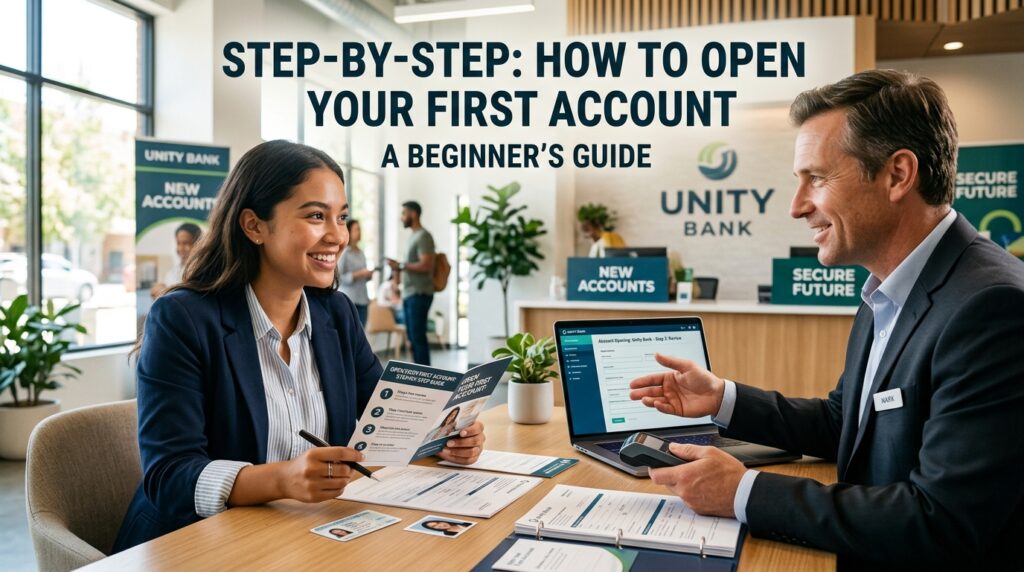
Opening an account is usually a 10-minute process, but here’s what to expect:
- Visit the Website: Go to the broker’s official site (e.g., FOREX.com).
- Sign Up: Click “Join” or “Create Account.” You’ll need your name, address, and email.
- Verify Identity: Because these are regulated financial institutions, you’ll need to upload a photo of your Driver’s License or Passport. This is standard, don’t worry.
- Answer Questions: They’ll ask about your trading experience. If you say “None,” it’s fine. They might ask about your annual income and net worth.
- Fund (or not): You don’t have to fund it right away. Click “Demo Account” first.
- Download the App: Get the mobile app and practice logging in with your demo credentials.
Common Mistakes Beginners Make (And How to Avoid Them)
I’ve seen friends lose money by doing these exact things. Learn from their pain, not your own.
- Skipping the Demo: The biggest mistake. You wouldn’t drive a car without practicing in a parking lot. Don’t trade real money without practicing in a demo. Spend at least a month on the demo .
- Over-Leveraging: Just because you can use 50:1 leverage doesn’t mean you should. Start with 5:1 or 10:1. It keeps you in the game longer.
- Trading Exotic Pairs: Stick to the Majors (EUR/USD, GBP/USD, USD/JPY, USD/CAD). These pairs have the lowest spreads and are the most stable .
- No Stop Loss: A Stop Loss is an order that automatically closes your trade if it loses a certain amount. Always use one. It’s your seatbelt .
Frequently Asked Questions
Here are some questions I hear all the time from new US traders.
Is Forex trading legal in the USA?
Yes, it is 100% legal. However, it is highly regulated. You must use a broker that is registered with the CFTC and is a member of the NFA . Avoid unregulated offshore brokers.
Can I start Forex with $100?
Absolutely. All the brokers on this list—FOREX.com, tastyfx, Plus500—allow you to start with $100 or less . Just remember that with a small account, you need to trade micro lots to manage risk.
What is the safest Forex platform?
Safety is about regulation. FOREX.com and tastyfx are two of the safest because they are directly regulated by the top US authorities. Charles Schwab is also a massive, trusted financial institution .
Do I need to download software?
Not anymore. Most of the best Forex trading platforms now offer powerful web-based platforms that run in your browser (like Chrome or Safari). You can also download mobile apps for iOS and Android .
What’s the difference between MT4 and a broker’s app?
MetaTrader 4 (MT4) is a third-party trading platform that many brokers offer. It’s the industry standard and allows for automated trading (robots) and custom indicators. A broker’s own app (like FOREX.com’s main app) is usually designed to be simpler and more user-friendly . As a beginner, start with the broker’s own app, then move to MT4 later if you need more advanced tools.
Your First Step into Forex
Finding the best Forex trading platform is the first and most important step in your trading journey. As a beginner in the USA, you have a safety net that many traders in other countries don’t have—strict regulations that protect your funds.
To recap:
- FOREX.com is your go-to for learning the ropes.
- tastyfx is your go-to for saving money on fees.
- Plus500 is your go-to for simplicity.
Don’t overthink which one to pick. All five listed here are excellent choices. The real work isn’t the platform; it’s the trader using it.
So, here’s my challenge to you: Pick one from the list, open a demo account right now, and just click around. See how a chart moves. Watch how the news affects the price. Do that for a few weeks.
When you’re consistently profitable on the demo, then—and only then—deposit that $100 and take your first shot at the real market. The market will still be there. Take your time, learn the game, and trade smart.
Happy trading

